
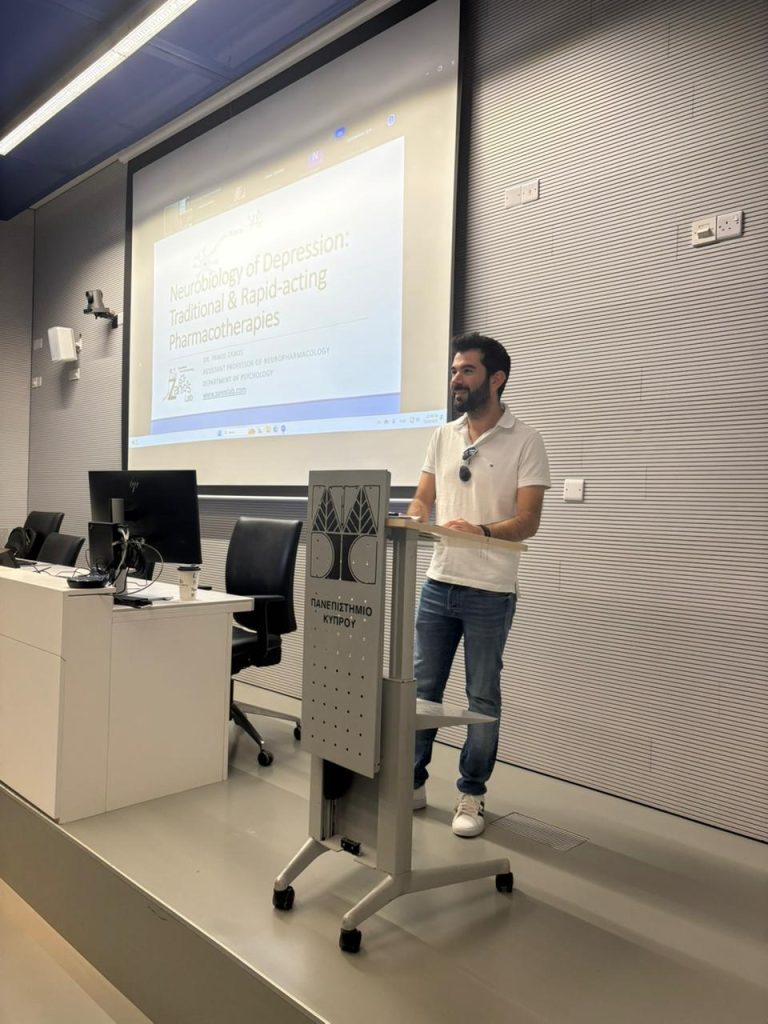
Dr. Panos Zanos delivered an invited presentation at the 6th German-Cypriot Conference Psychotherapy Dialogues, titled “Neurobiology of Depression: Traditional & Rapid-acting Pharmacotherapies.”
The presentation addressed a critical challenge in psychiatry: conventional antidepressants require three to four weeks to produce therapeutic effects, with approximately thirty percent of patients failing to respond. Dr. Zanos explored the neurobiological foundations of depression, including HPA axis dysfunction, the monoaminergic theory and its limitations, and how chronic stress affects brain plasticity through reduced neurogenesis and synaptic loss in the hippocampus and prefrontal cortex.
A major focus was on rapid-acting antidepressants, particularly ketamine, which produces significant antidepressant effects within hours rather than weeks. Dr. Zanos discussed four mechanistic hypotheses for ketamine’s rapid action involving NMDA receptor blockade, BDNF release, and mTORC1 pathway activation, as well as the possible involvement of ketamine’s hydroxynorketamine metabolites. He also presented exciting clinical developments, including ongoing Phase II studies of hydroxynorketamine—a ketamine metabolite with potentially fewer side effects—led by Dr. Carlos Zarate at NIMH.