
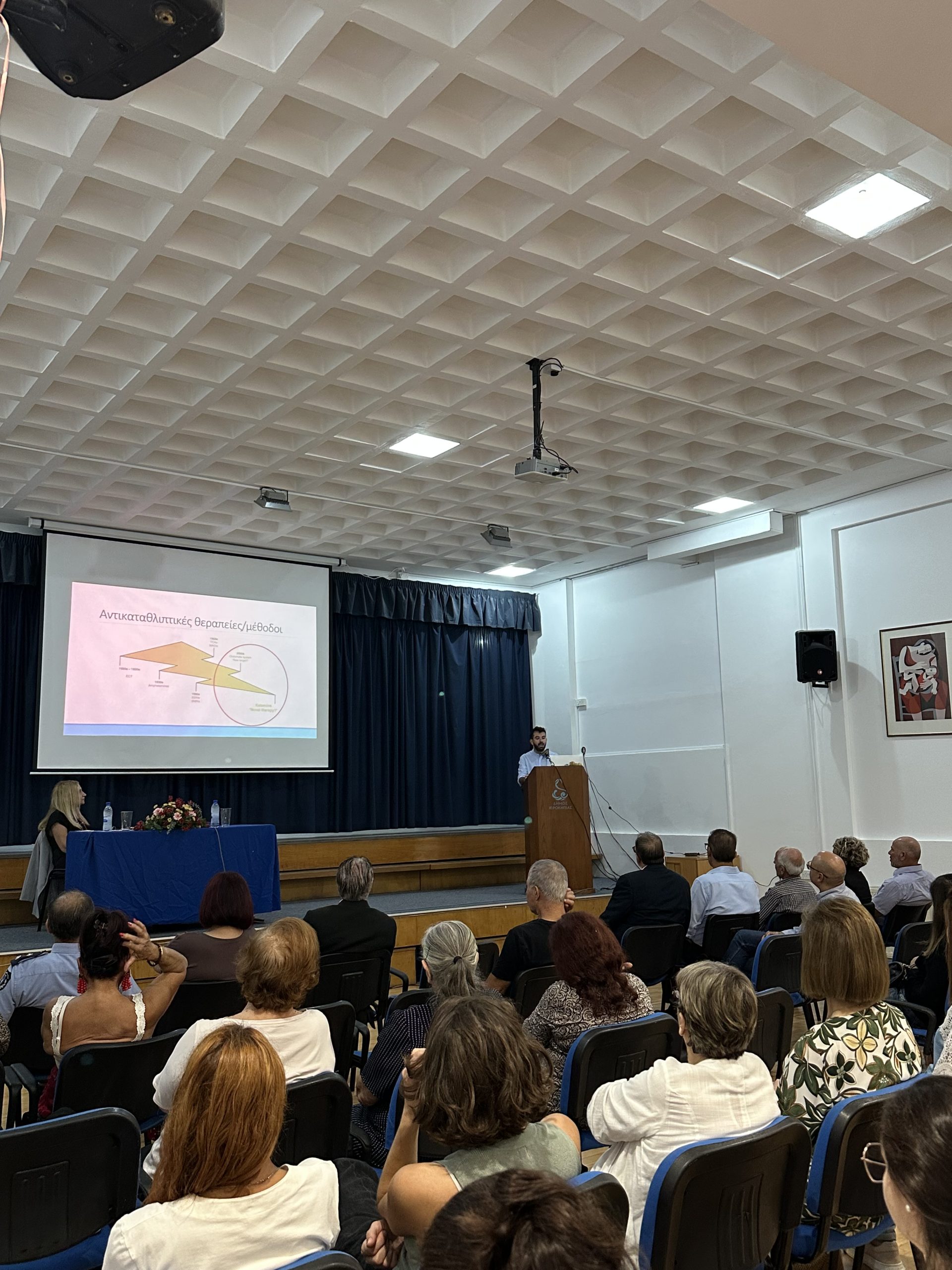
Dr. Panos Zanos recently delivered a presentation on novel pharmacological therapies for brain diseases at the Ierokipio University in Paphos, Cyprus. The Ierokipio University is a lifelong learning initiative that brings scientific knowledge to the general public, fostering dialogue between researchers and community members on important health and medical topics.
The presentation provided an overview of the Translational Neuropharmacology Lab’s research on innovative approaches to treating various brain disorders, with particular focus on depression, substance use disorders, and other neuropsychiatric conditions. Dr. Zanos discussed how emerging pharmacotherapies, including ketamine and other novel compounds, are being investigated for their potential to address treatment-resistant conditions where conventional medications have proven inadequate.
A significant portion of the talk focused on the PROUD (Preventing Relapse in Opioid Use Disorder) study—Cyprus’s first drug-intervention clinical trial—which investigates ketamine’s potential to treat comorbid depression in individuals recovering from opioid addiction. The presentation also covered the broader landscape of ketamine research, including its rapid-acting antidepressant properties and potential applications across various psychiatric conditions.
Dr. Zanos explained the neurobiological mechanisms through which these novel pharmacotherapies may exert their therapeutic effects, including their actions on neurotransmitter systems, synaptic plasticity, and brain circuitry. The presentation emphasized the importance of rigorous preclinical and clinical research in translating laboratory discoveries into evidence-based treatments that can improve patients’ lives.
Brain disorders, including depression, anxiety, substance use disorders, and neurodegenerative diseases, represent major public health challenges affecting millions of people worldwide. Traditional treatments, while beneficial for many, leave significant gaps in care, particularly for individuals with treatment-resistant conditions. The lab’s research aims to identify and validate novel therapeutic targets and compounds that can address these unmet medical needs.
Public engagement activities like this presentation are essential for bridging the gap between scientific research and community understanding. By sharing our work with the broader public, we aim to increase awareness about brain disorders, reduce stigma surrounding mental health and addiction, and foster informed public discourse about the development of innovative treatments. The interactive format allowed for valuable questions and discussions, highlighting the community’s interest in understanding both the challenges of treating brain disorders and the promise of emerging therapies.
We are grateful to the Ierokipio University in Paphos for providing this platform to share our research with the community and look forward to continued engagement with the public as our research program advances.