
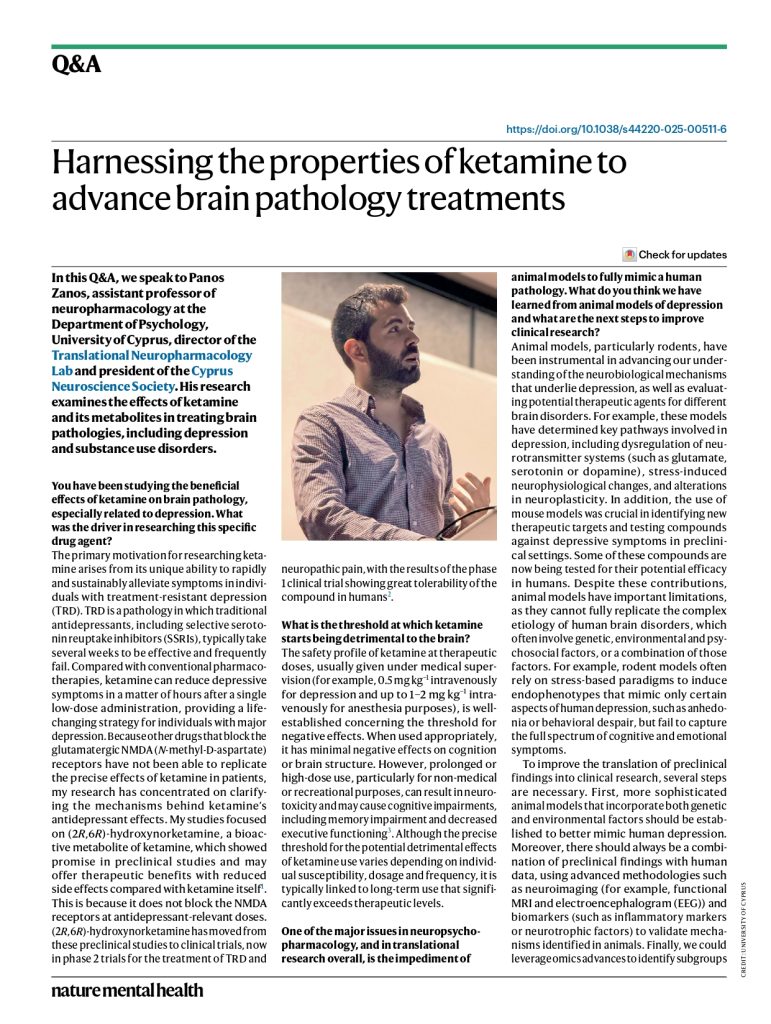
We are happy to share that Dr. Zanos, the Director of the Translational Neuropharmacology Lab, was recently featured in a Q&A article published by Nature Mental Health. The discussion explores our laboratory’s pioneering work on ketamine and its metabolites as novel treatments for brain pathologies, with particular emphasis on depression and substance use disorders.
The conversation delves into the unique ability of ketamine to rapidly alleviate symptoms in individuals with treatment-resistant depression, a condition where traditional antidepressants often fail or take weeks to become effective. Our research has focused extensively on (2R,6R)-hydroxynorketamine, a bioactive metabolite of ketamine that shows promise in preclinical studies and may offer therapeutic benefits with reduced side effects compared to ketamine itself. This compound has now advanced to phase 2 clinical trials for treatment-resistant depression and neuropathic pain, with phase 1 results demonstrating excellent tolerability in humans.
The article also highlights our groundbreaking work in Cyprus, where we are conducting the country’s first drug-interventional clinical trial. This phase 2, double-blind, placebo-controlled study is evaluating ketamine’s effectiveness in reversing comorbid affective disorders and maintaining opioid abstinence. This initiative represents a significant step forward in addressing opioid-use disorders, a critical public health concern both locally and globally.
Beyond our specific research projects, the discussion touches on important methodological considerations in neuroscience research, including the role of animal models in understanding human brain disorders and the need for more sophisticated translational approaches. Dr. Zanos also spoke about his role as founding member and president of the Cyprus Neuroscience Society, which works to advance neuroscience research in Cyprus through knowledge sharing, training opportunities, and international collaboration.
Looking toward the future, Dr. Zanos expresses optimism about the potential of ketamine metabolites to address treatment-resistant depression and substance-use disorders, as well as the broader field of psychedelics as pharmacotherapies for brain disorders. With growing evidence demonstrating effectiveness and collaborative initiatives like the PSY-NET COST Action involving researchers across many European countries, there is strong momentum toward reshaping mental health care and offering hope to millions of patients worldwide.
This feature in Nature Mental Health underscores the impact and reach of the work being conducted at the Translational Neuropharmacology Lab, and we are honored to contribute to the global conversation on advancing treatments for brain pathologies.
To read the full Q&A article visit Nature Mental Health: https://www.nature.com/articles/s44220-025-00511-6.