
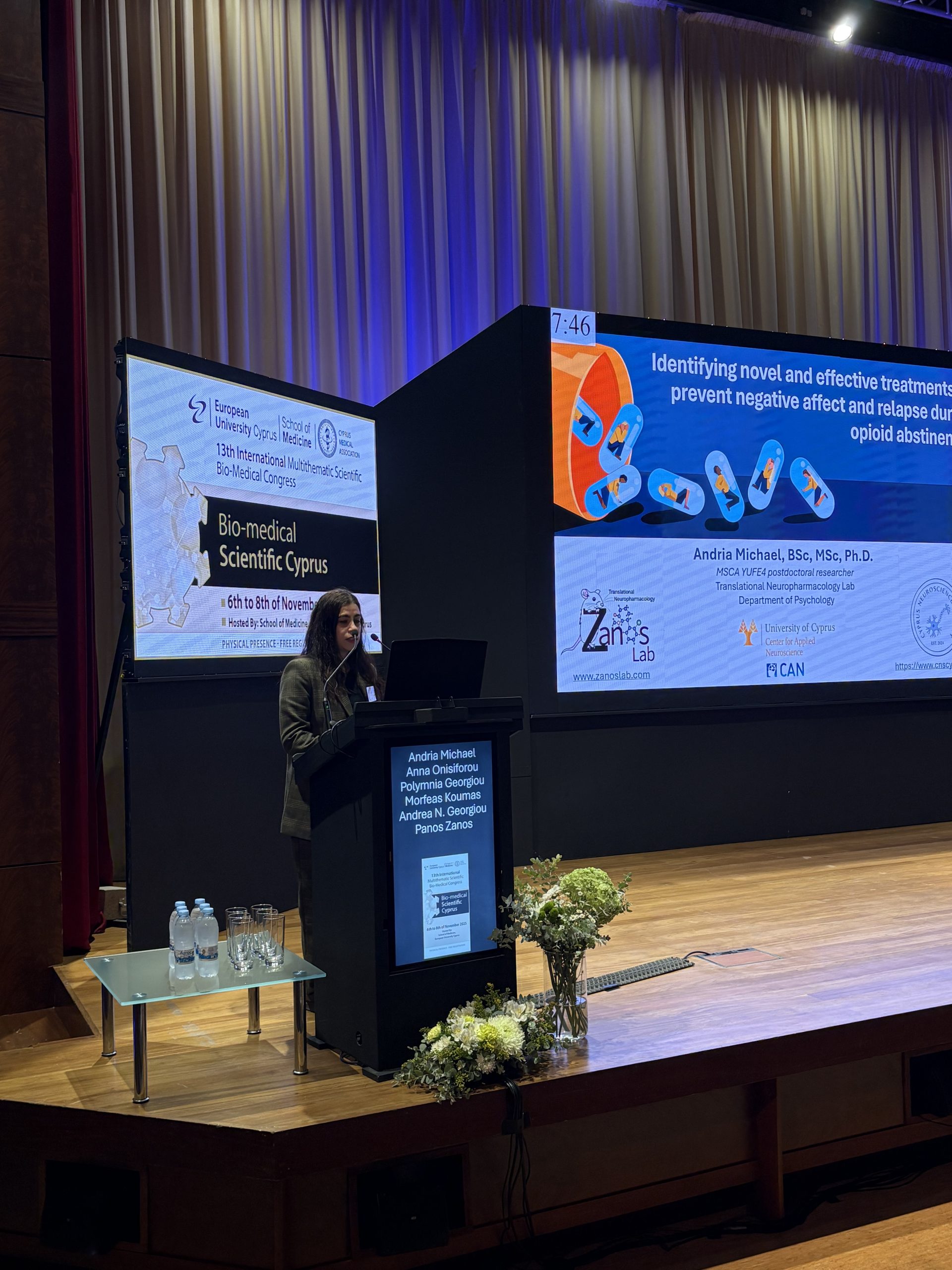
Dr. Andria Michael, a postdoctoral researcher in the Zanos Lab, recently represented our laboratory at the 13th International Multithematic Scientific Bio-Medical Congress in Cyprus, at the European University Cyprus School of Medicine. Her presentation highlighted groundbreaking work on novel pharmacotherapies for preventing relapse to opioid use disorders during abstinence. The research focuses on ketamine, a compound that has shown promising potential in disrupting the neurobiological mechanisms that drive individuals back to drug use after periods of abstinence.
Dr. Michael detailed our ongoing Phase II randomized controlled clinical trial examining the efficacy of intravenous ketamine administration in patients undergoing opioid abstinence. This rigorous clinical study represents a critical step in translating preclinical findings into real-world therapeutic interventions for individuals struggling with opioid use disorder. By carefully monitoring patients’ responses to controlled ketamine treatments, the trial aims to establish both the safety profile and therapeutic potential of this approach in preventing relapse during the vulnerable period of early abstinence.
Beyond the clinical trial, Dr. Michael also explained our parallel efforts using animal models to identify next-generation compounds that could replicate ketamine’s beneficial effects while minimizing its known side effects, such as dissociation and potential for misuse. This translational research approach allows the lab to screen and optimize novel pharmacological agents before advancing them to human studies, potentially paving the way for safer and more effective treatments for opioid use disorder. Through this comprehensive research program, combining clinical trials with mechanistic animal studies, the Zanos Lab continues to advance our understanding of addiction neurobiology and develop innovative therapeutic strategies to combat the opioid crisis.