
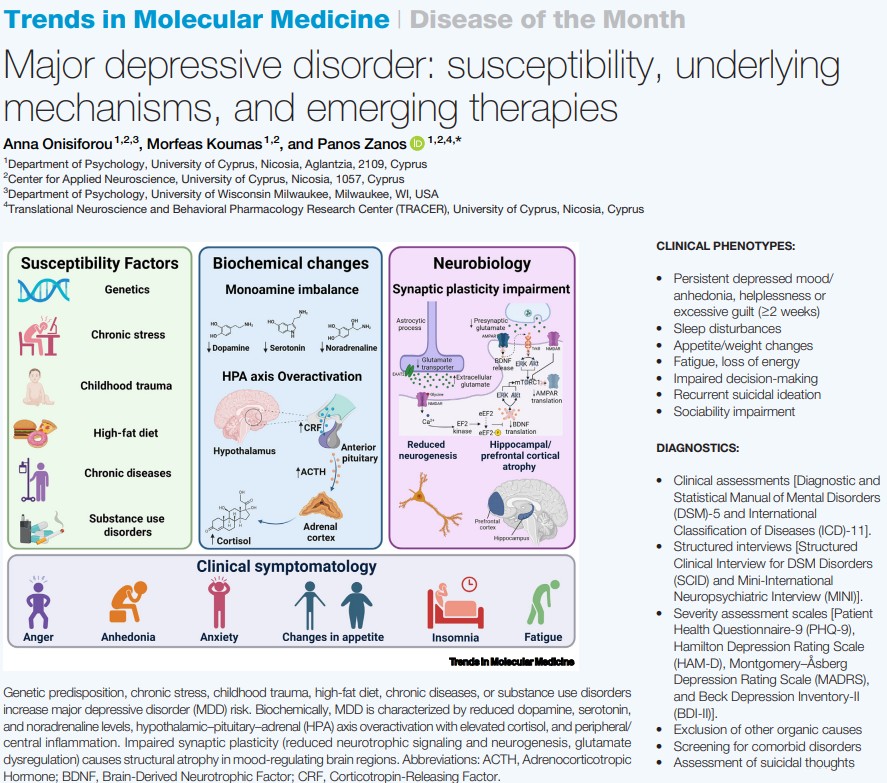
The Zanos Lab is pleased to announce the publication of a short review article in the Disease of the Month series of Trends in Molecular Medicine. The article, titled “Major depressive disorder: susceptibility, underlying mechanisms, and emerging therapies,” is authored by Dr. Anna Onisiforou, Mr. Morfeas Koumas, and the lab director, Dr. Panos Zanos.
This visually engaging overview provides a synthesis of current understanding of major depressive disorder, from genetic susceptibility and neurobiological mechanisms to diagnostic approaches and therapeutic interventions. The review aims to address the complex etiology of major depressive disorder by noting how genetic predisposition, chronic stress, childhood trauma, dietary factors, and substance use disorders increase vulnerability to depression. Key biochemical hallmarks are elucidated, including monoamine imbalances, hypothalamic-pituitary-adrenal axis overactivation, peripheral and central inflammation, and impaired synaptic plasticity leading to structural atrophy in mood-regulating brain regions. The article provides comprehensive coverage of diagnostic approaches, clinical phenotypes, and the multidimensional nature of depressive symptomatology.
A focus of this article is dedicated to the therapeutic landscape, discussing traditional pharmacotherapies alongside their limitations, including delayed onset of effects, modest remission rates, and significant adverse effects. The review highlights emerging therapeutic strategies for treatment-resistant depression, including ketamine and esketamine as rapid-acting antidepressants, transcranial magnetic stimulation, psychedelic-assisted therapies with psilocybin, and anti-inflammatory agents. These emerging therapies represent a paradigm shift moving beyond the monoamine hypothesis to address synaptic plasticity and neuroinflammation. The review concludes by noting the potential for precision medicine approaches using inflammatory markers and genetic data to guide personalized treatment selection.
To read the full article, please visit: https://www.sciencedirect.com/science/article/pii/S1471491425002904?dgcid=author