

Electrophysiology rigs now operational at the TRACER Center
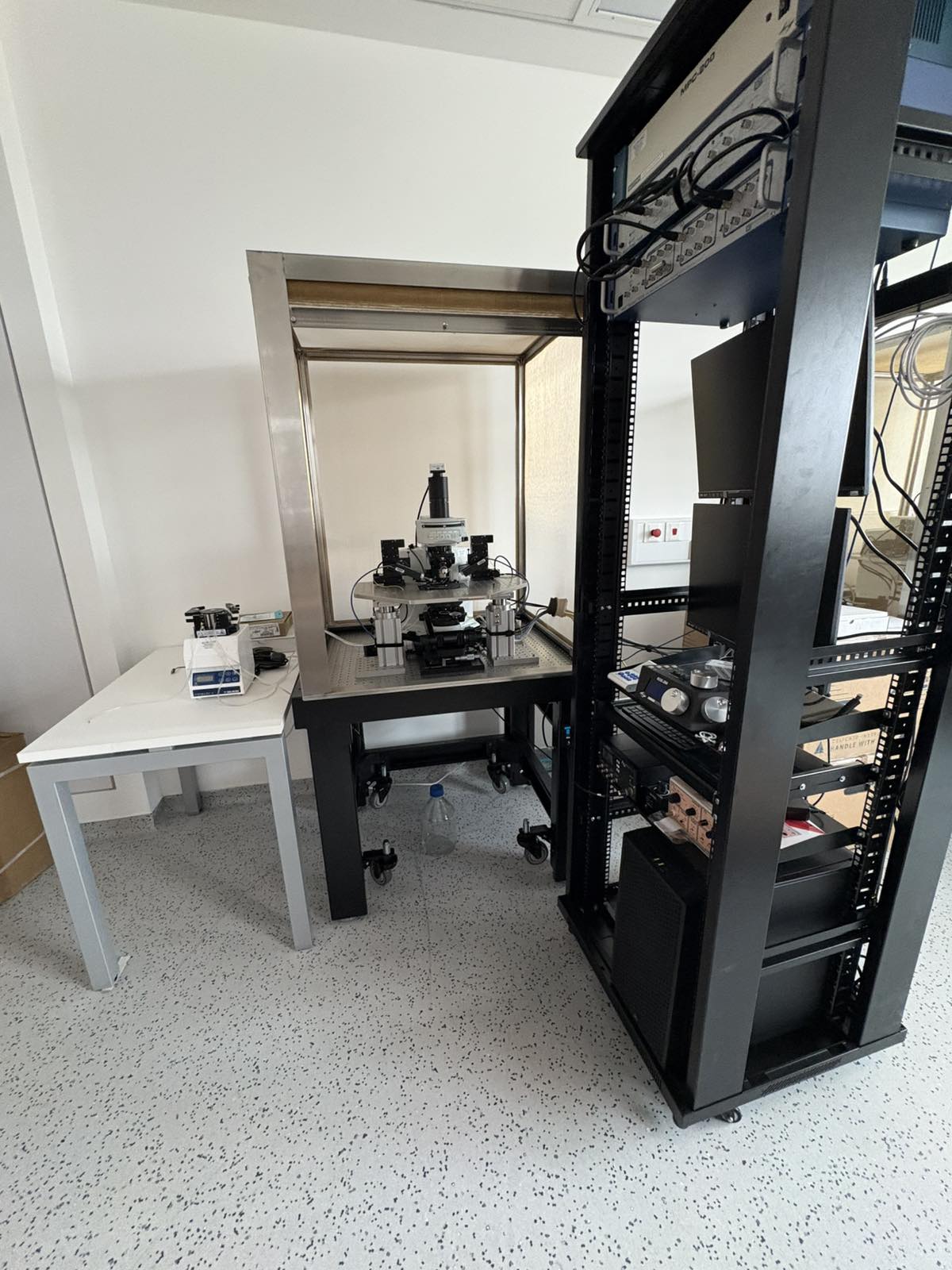
The TRACER Center at the University of Cyprus has successfully completed the installation and validation of its electrophysiology rigs. These systems are now fully operational and available for experimental use.
The electrophysiology platform enables high-resolution investigation of neuronal function at the cellular and synaptic level. The rigs are equipped with advanced components, including anti-vibration tables, Faraday cages, precision micromanipulators, perfusion systems, and integrated data acquisition and stimulation hardware, ensuring stable and reliable recordings across experimental conditions .
These systems allow researchers to characterize neuronal excitability, synaptic transmission, and network dynamics in ex vivo preparations, providing critical insight into the cellular mechanisms underlying behavior and pharmacological interventions.
As part of the TRACER open-access infrastructure, the electrophysiology rigs can be used as standalone systems or in combination with other experimental platforms, supporting multi-level investigations of neurobiological processes.
This milestone further strengthens TRACER as a comprehensive research environment for advanced neuroscience.
Fluorescence microscope component for visualization of fiber photometry and miniscope brain images now operational at the TRACER Center
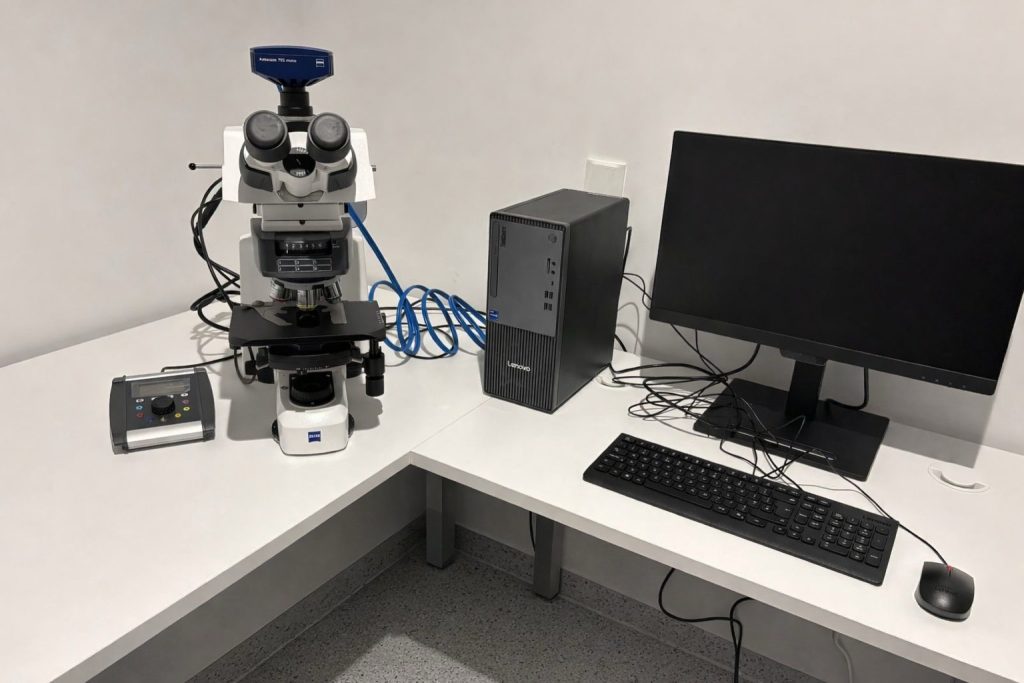
The TRACER Center at the University of Cyprus has successfully completed the installation and validation of its fluorescence microscopy system. The platform is now fully operational and available for experimental use.
The fluorescence microscope provides high-resolution imaging capabilities for the visualization of labeled neural structures, supporting critical validation steps in preclinical experiments. The system is equipped with advanced optical components, multi-channel fluorescence illumination, and sensitive imaging acquisition, enabling precise detection of fluorescent signals across a range of wavelengths .
This platform plays an essential role in experiments involving fiber photometry and miniscope technologies, allowing verification of viral expression, anatomical targeting, and implant placement. These capabilities are crucial for ensuring the accuracy and interpretability of in vivo neural recordings.
As part of the TRACER open-access infrastructure, the fluorescence microscope functions as a shared imaging resource that complements other experimental systems, supporting multi-level investigation of neurobiological mechanisms.
This addition further strengthens TRACER as a comprehensive and versatile research environment for advanced neuroscience.
Fiber photometry systems now operational at the TRACER Center
The TRACER Center at the University of Cyprus has successfully completed the installation and validation of its fiber photometry systems. These platforms are now fully operational and available for experimental use.
The fiber photometry systems enable real-time recording of neural activity from defined brain regions in vivo, providing high-sensitivity measurements of fluorescence signals linked to neuronal and circuit dynamics. The installed systems support simultaneous recordings from multiple brain areas, with stable excitation sources and integrated acquisition capabilities, allowing precise monitoring of calcium-dependent activity and related signals .
These platforms allow researchers to investigate neural correlates of behavior and pharmacological interventions in freely behaving or task-engaged models, offering critical insight into circuit-level mechanisms.
As part of the TRACER open-access infrastructure, the fiber photometry systems can be used independently or alongside other experimental platforms, supporting multi-level approaches to neuroscience research.
This milestone further expands the capabilities of TRACER as a comprehensive and flexible research environment for advanced neuroscience.
Operant conditioning chambers now operational at the TRACER Center
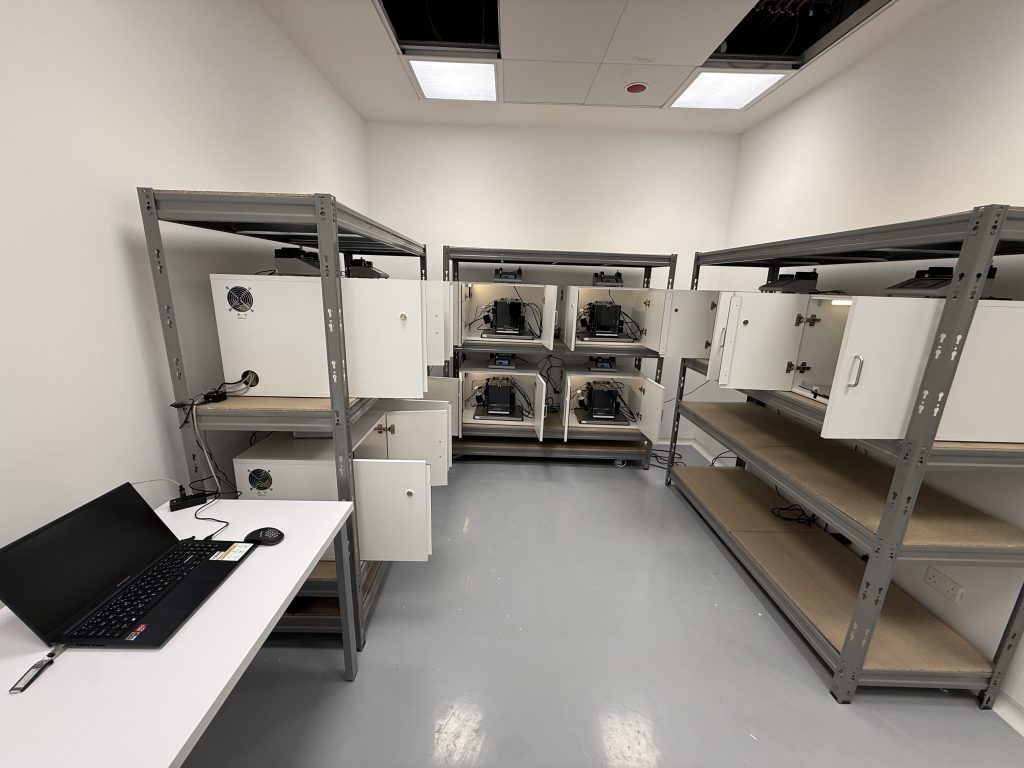
The TRACER Center at the University of Cyprus has successfully completed the installation and validation of its operant conditioning chambers. These systems are now fully operational and available for experimental use.
The operant conditioning platform enables precise and flexible assessment of a wide range of behavioral processes, including learning, motivation, reinforcement, and decision-making in preclinical models. The chambers support customizable paradigms and high-resolution behavioral data acquisition, allowing researchers to investigate complex behavioral phenotypes under controlled conditions.
As part of the TRACER open-access infrastructure, the operant conditioning systems can be used independently or in combination with other experimental platforms to support multi-level investigations of neurobiological mechanisms and pharmacological interventions.
This milestone represents an important step in establishing TRACER as a comprehensive research environment for behavioral neuroscience.