
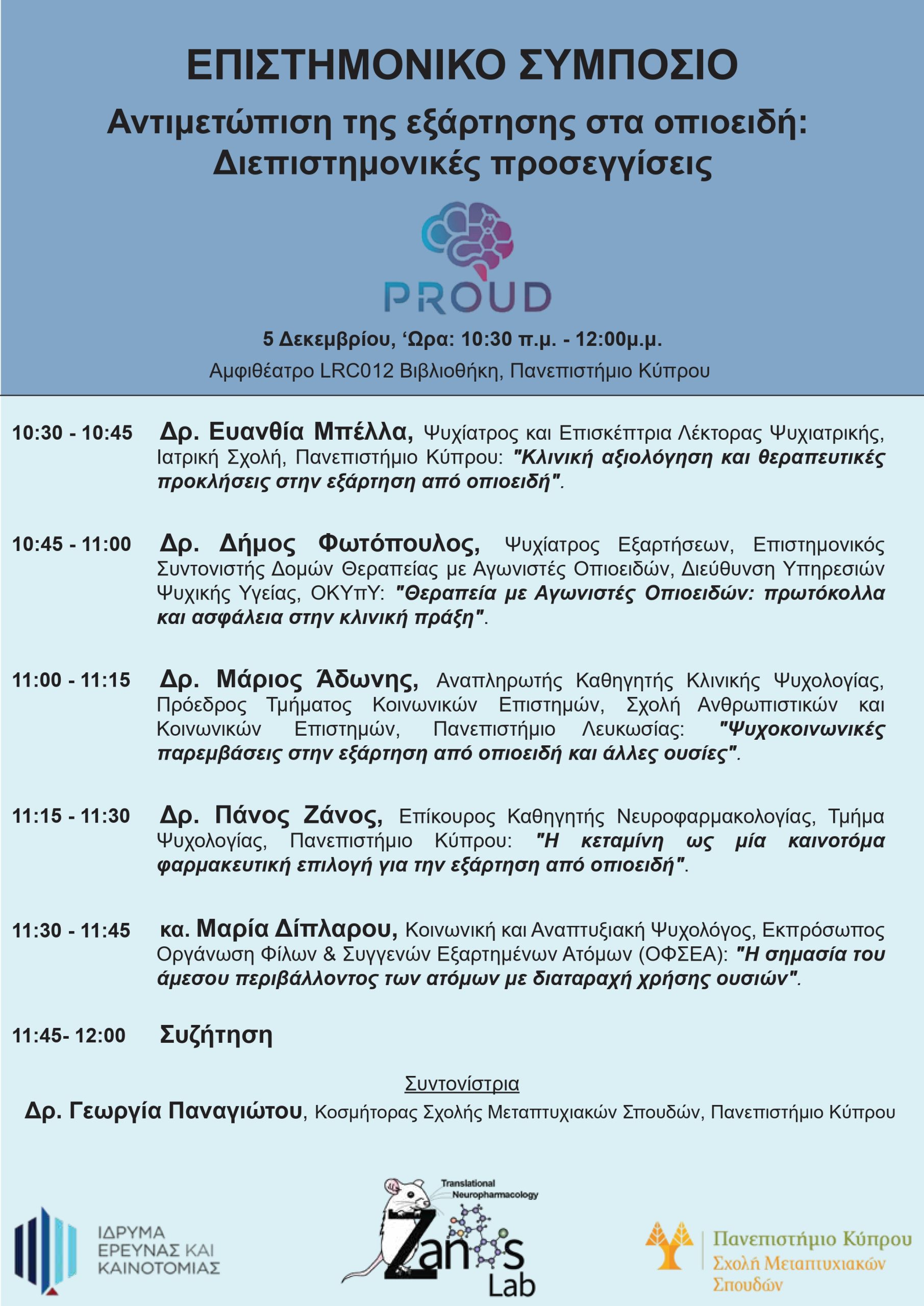
The Zanos Lab and the PROUD project team successfully hosted a scientific symposium titled “Addressing Opioid Addiction: Interdisciplinary Approaches” on December 5 at the University of Cyprus Library Amphitheater LRC012. This symposium brought together leading experts from psychiatry, clinical psychology, neuropharmacology, and community advocacy to discuss comprehensive approaches to understanding and treating opioid use disorder, one of the most pressing public health challenges facing our society today.
The symposium featured five distinguished speakers who presented diverse perspectives on opioid addiction, reflecting the multifaceted nature of this complex condition. Dr. Evanthia Bella, Psychiatrist and Visiting Lecturer in Psychiatry at the Medical School of the University of Cyprus, opened the symposium with a presentation on clinical assessment and therapeutic challenges in opioid addiction, providing essential insights into the diagnostic and treatment landscape. Following this, Dr. Dimos Fotopulos, Addiction Psychiatrist and Scientific Coordinator of Opioid Agonist Therapy Structures at the Mental Health Services Directorate of Cyprus State Health Services Organization, discussed opioid agonist therapy protocols and safety considerations in clinical practice, offering practical perspectives from the frontlines of addiction treatment. Dr. Marios Adonis, Associate Professor of Clinical Psychology and Chair of the Department of Social Sciences at the University of Nicosia, presented on psychosocial interventions in opioid and other substance addictions, highlighting the crucial role of psychological and social factors in recovery and rehabilitation.
Dr. Panos Zanos, Assistant Professor of Neuropharmacology in the Department of Psychology at the University of Cyprus and Principal Investigator of the PROUD study, presented on ketamine as an innovative pharmaceutical option for opioid addiction. This presentation discussed the translational neuropharmacology research underpinning the PROUD clinical trial, including preclinical findings on ketamine’s mechanisms of action and its potential to address multiple domains of opioid use disorder, from promoting treatment retention to reversing comorbid affective disorders and maintaining abstinence. The presentation bridged basic neuroscience research with clinical applications, demonstrating how mechanistic insights into NMDA receptor-dependent synaptic plasticity can inform novel therapeutic strategies for this challenging condition.
The symposium also featured Ms. Maria Diplarou, Social and Developmental Psychologist and Representative of the Organization of Friends and Relatives of Addicted Persons (OFSEA), who spoke on the crucial importance of the immediate environment and family support systems for individuals with substance use disorders. Her presentation provided valuable insights into the lived experiences of families affected by addiction and the essential role that community-based support plays in long-term recovery. This diverse panel of speakers reflected the symposium’s core theme: that addressing opioid addiction effectively requires an interdisciplinary approach that integrates clinical psychiatry, psychological interventions, neuropharmacological innovations, and community-based support systems. The event concluded with an engaging discussion period, providing an opportunity for attendees to engage with the speakers and explore the synergies between different therapeutic approaches.
The symposium was moderated by Dr. Georgia Panayiotou, Dean of the School of Graduate Studies at the University of Cyprus, and team member of the PROUD project, a clinical trial funded by the Research and Innovation Foundation of Cyprus. The PROUD project represents a pioneering effort to translate cutting-edge neuroscience research into clinical practice, examining whether ketamine can improve outcomes for individuals undergoing opioid substitution therapy. This symposium exemplified the collaborative spirit and translational focus that characterizes the PROUD project, bringing together researchers, clinicians, and community advocates to advance our collective understanding of opioid addiction and develop more effective, evidence-based treatment approaches.